
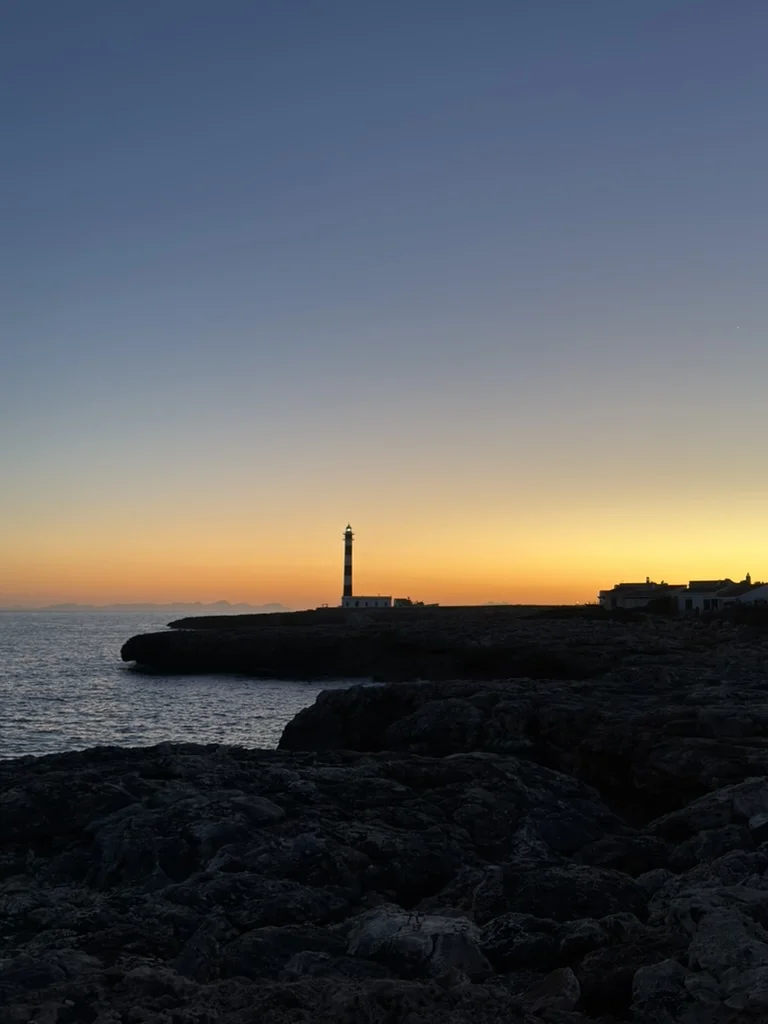
Cap d'Artrutx Lighthouse
Marks Menorca's south-western tip. An easy walk along the sea, especially beautiful at sunset.
This guide goes beyond your accommodation and covers the whole island: from Cap d'Artrutx and Binibeca Vell to Ciutadella, Mahón and the unspoilt coves of the south. Everything you need to make the most of your stay at either Casa Gonda or Loft Binibeca.
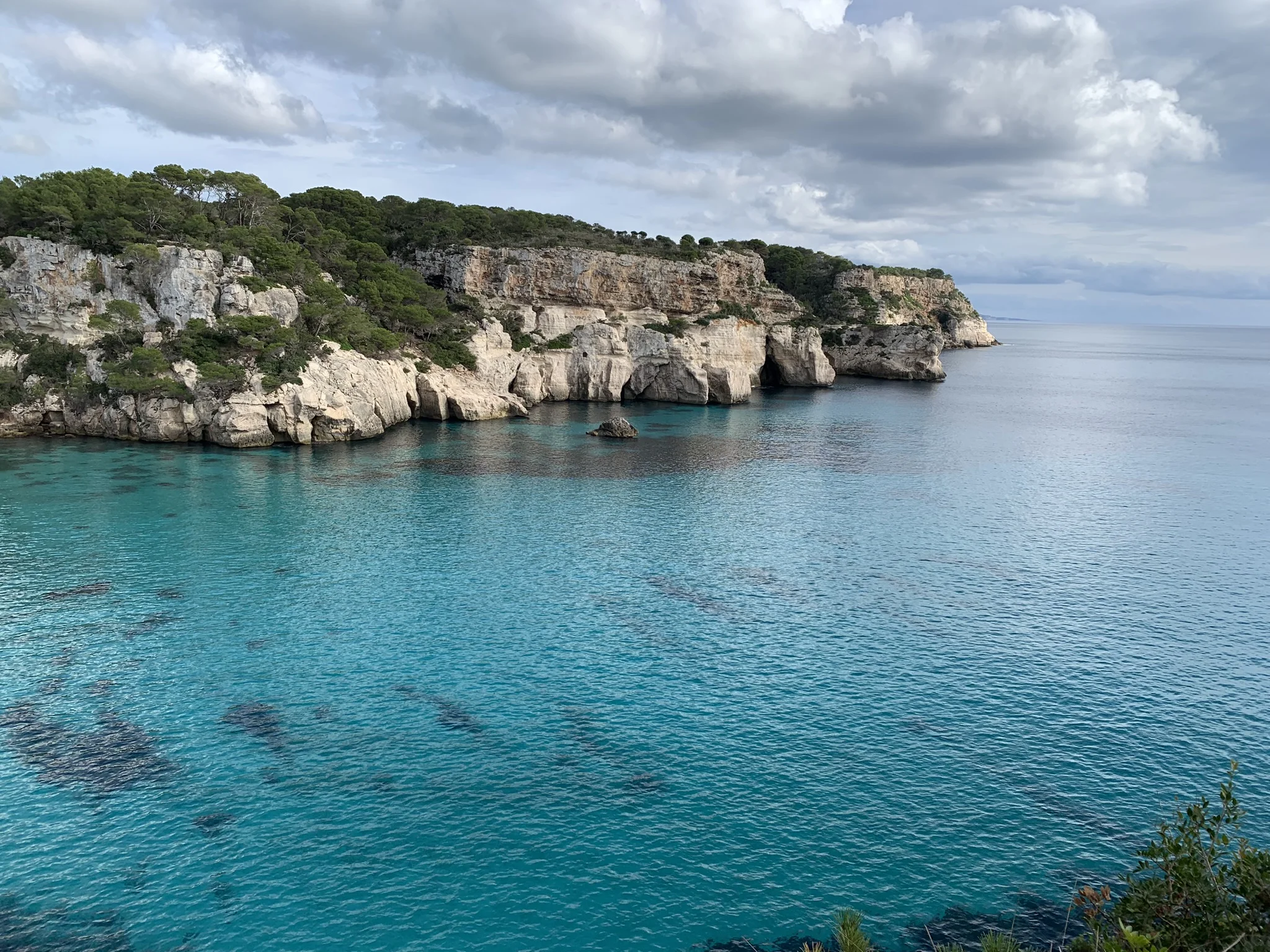
Cap d'Artrutx, where Casa Gonda is located, is part of the municipality of Ciutadella, on Menorca's western tip, next to developments like Cala en Bosc and Son Xoriguer. Binibeca Vell, where Loft Binibeca is located, belongs to the municipality of Sant Lluís, in the southeast of the island: a development built to resemble a traditional fishing village, with whitewashed houses, arches and narrow lanes that have made it one of Menorca's most photographed corners.
Marks Menorca's south-western tip. An easy walk along the sea, especially beautiful at sunset.
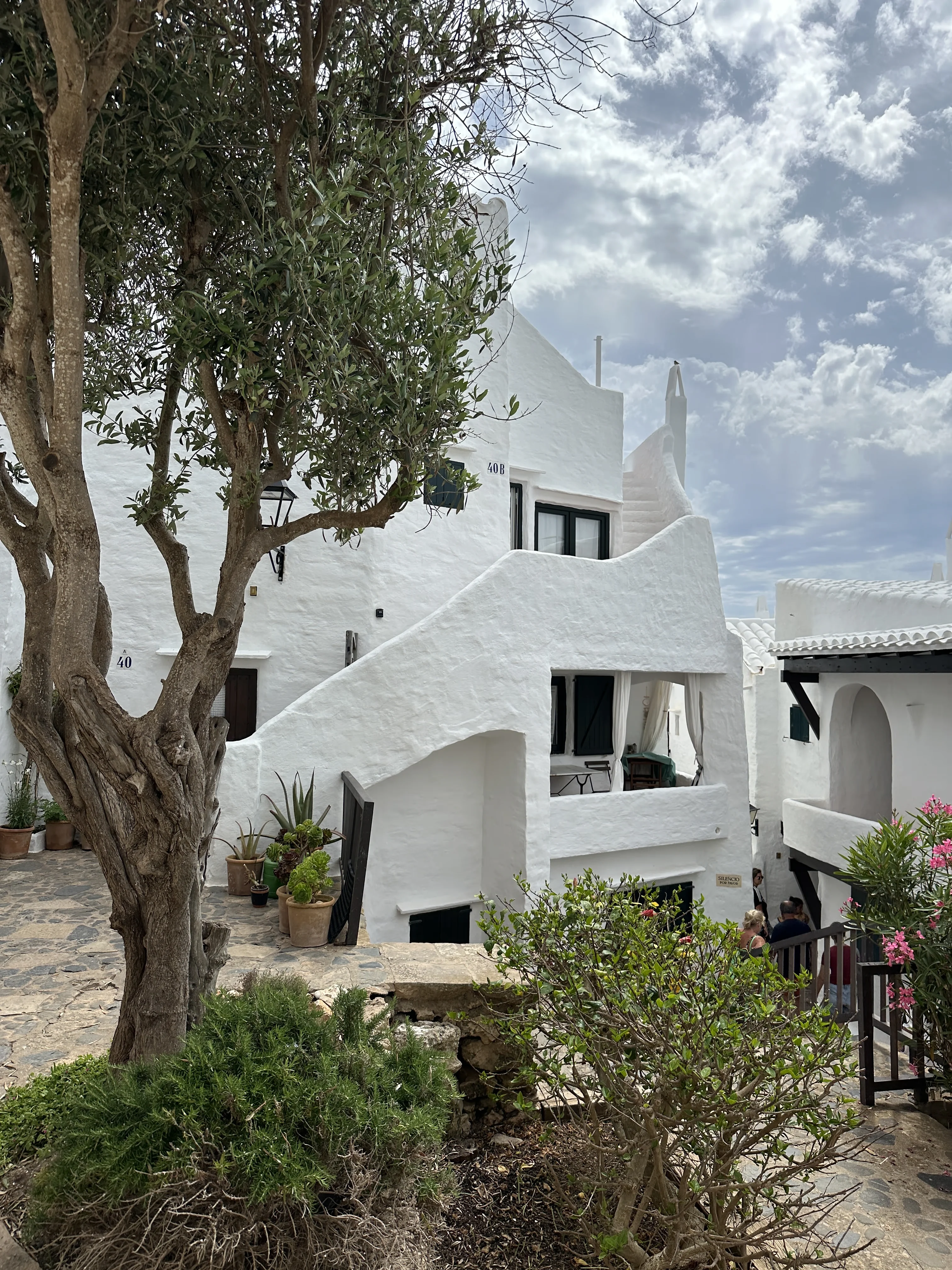
Whitewashed houses, arches, flower pots and a small navigable canal. You can walk the whole village in under half an hour, unhurried.
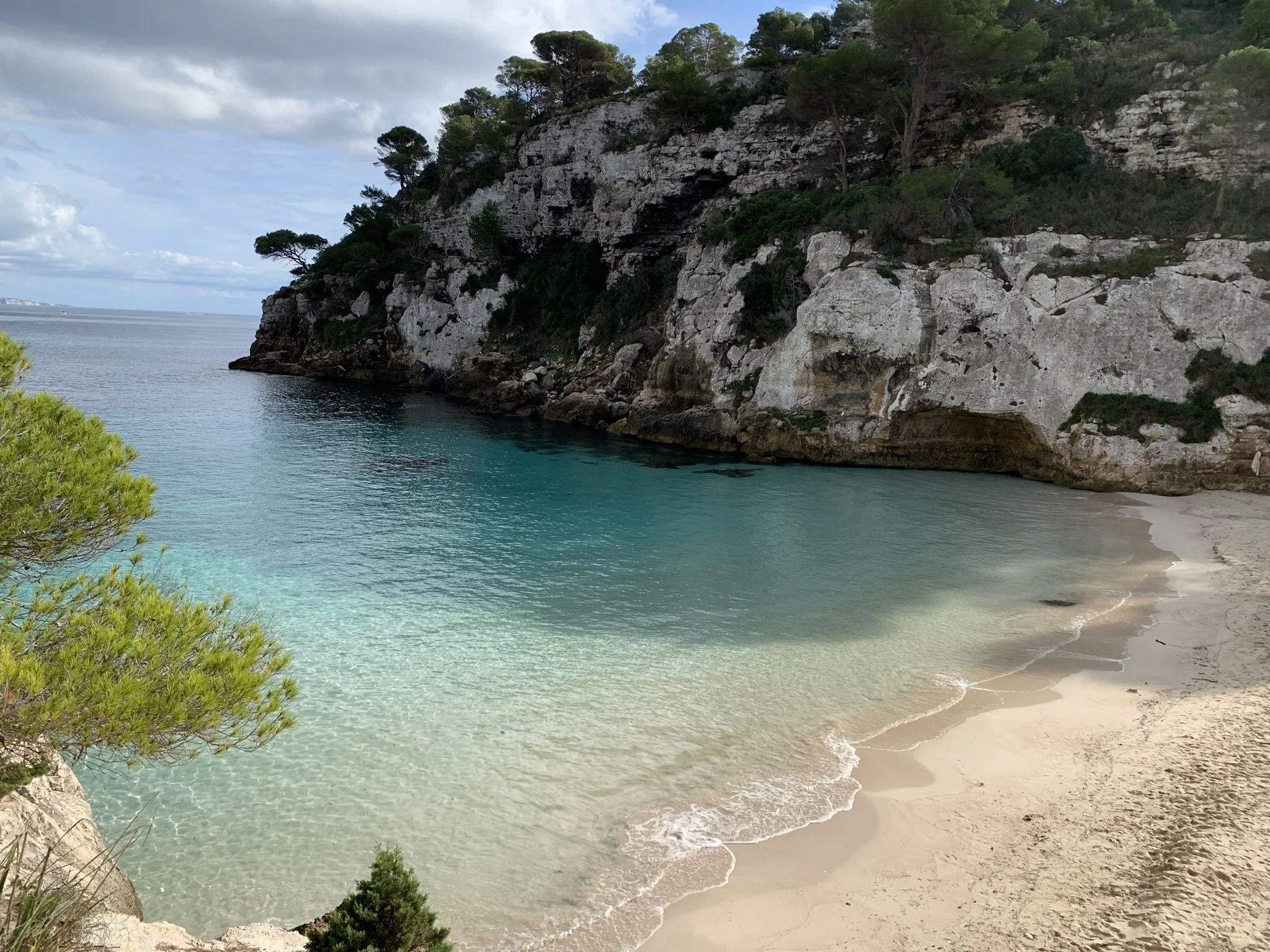
Cala en Bosc and Son Xoriguer from Cap d'Artrutx; Binibeca's own beach, Cala Torret, Cala Binissafúller and Punta Prima from Binibeca. Calm waters, great for families.
On the western tip of the island, Ciutadella was Menorca's capital until the English occupation of 1714 and still holds the island's most monumental old town: narrow streets like Ses Voltes, the Plaça des Born with its obelisk, and the Gothic cathedral of Santa María, built between the 13th and 14th centuries. Its harbour, tucked between white houses, is one of the prettiest on the island.
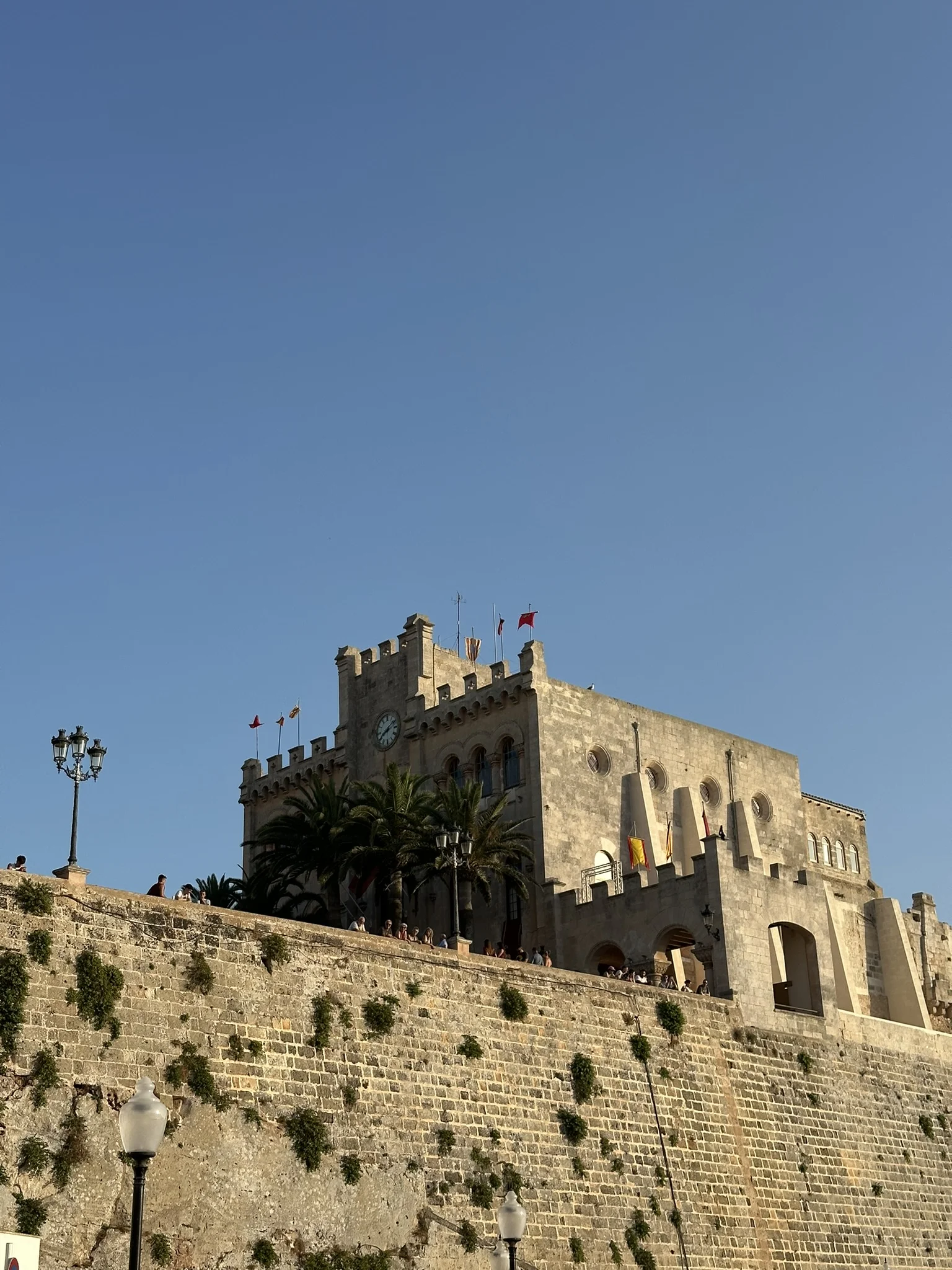
Cobbled streets, stately palaces and the cathedral of Santa María presiding over the city's highest point.
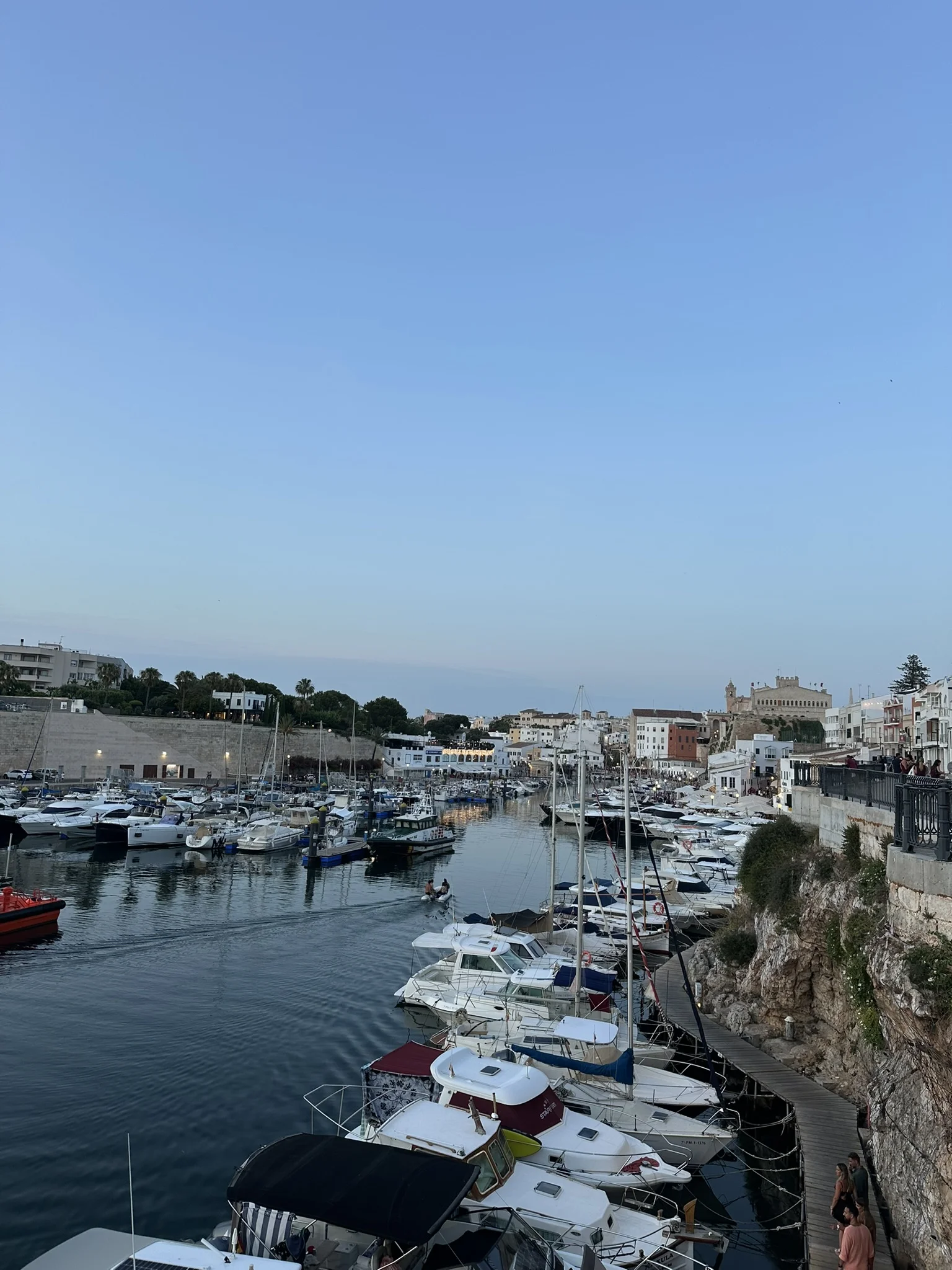
A narrow, elongated natural harbour lined with restaurant terraces at the water's edge — a great spot for dinner watching the boats go by.
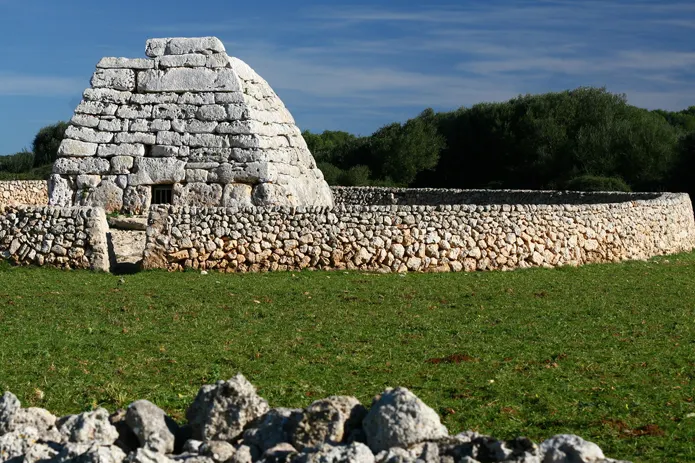
On the Ciutadella–Maó road, one of Menorca's best-known prehistoric funerary monuments, unique to the island.
On the eastern side of the island, Mahón (Maó) has been Menorca's administrative capital since the 18th century and has one of the longest natural harbours in the Mediterranean, around six kilometres long. The 18th-century British rule left its mark on the architecture, with Georgian-style façades and sash windows rarely seen elsewhere in Spain.
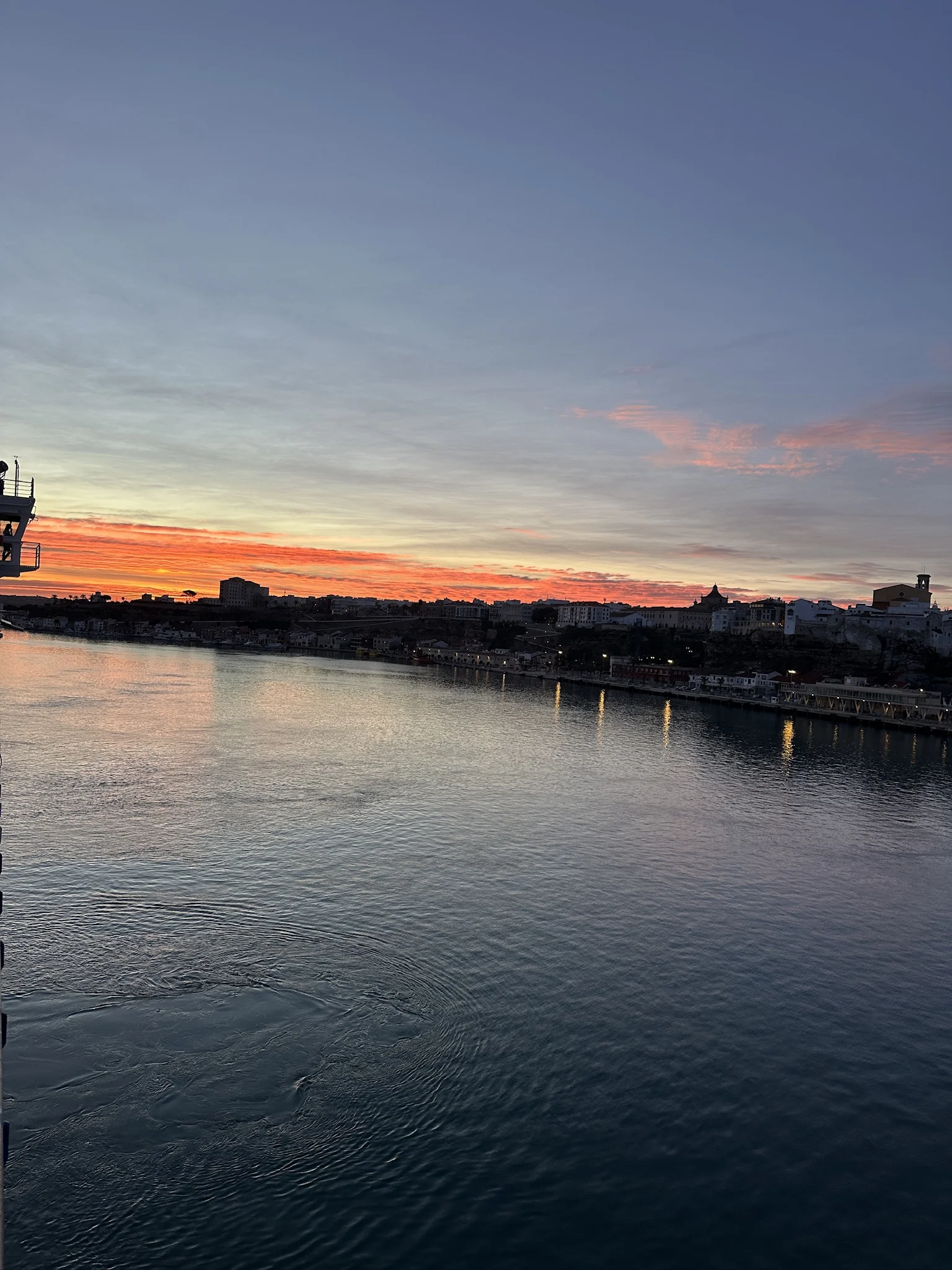
One of the largest natural harbours in the world, with historic islets inside it such as Isla del Rey.
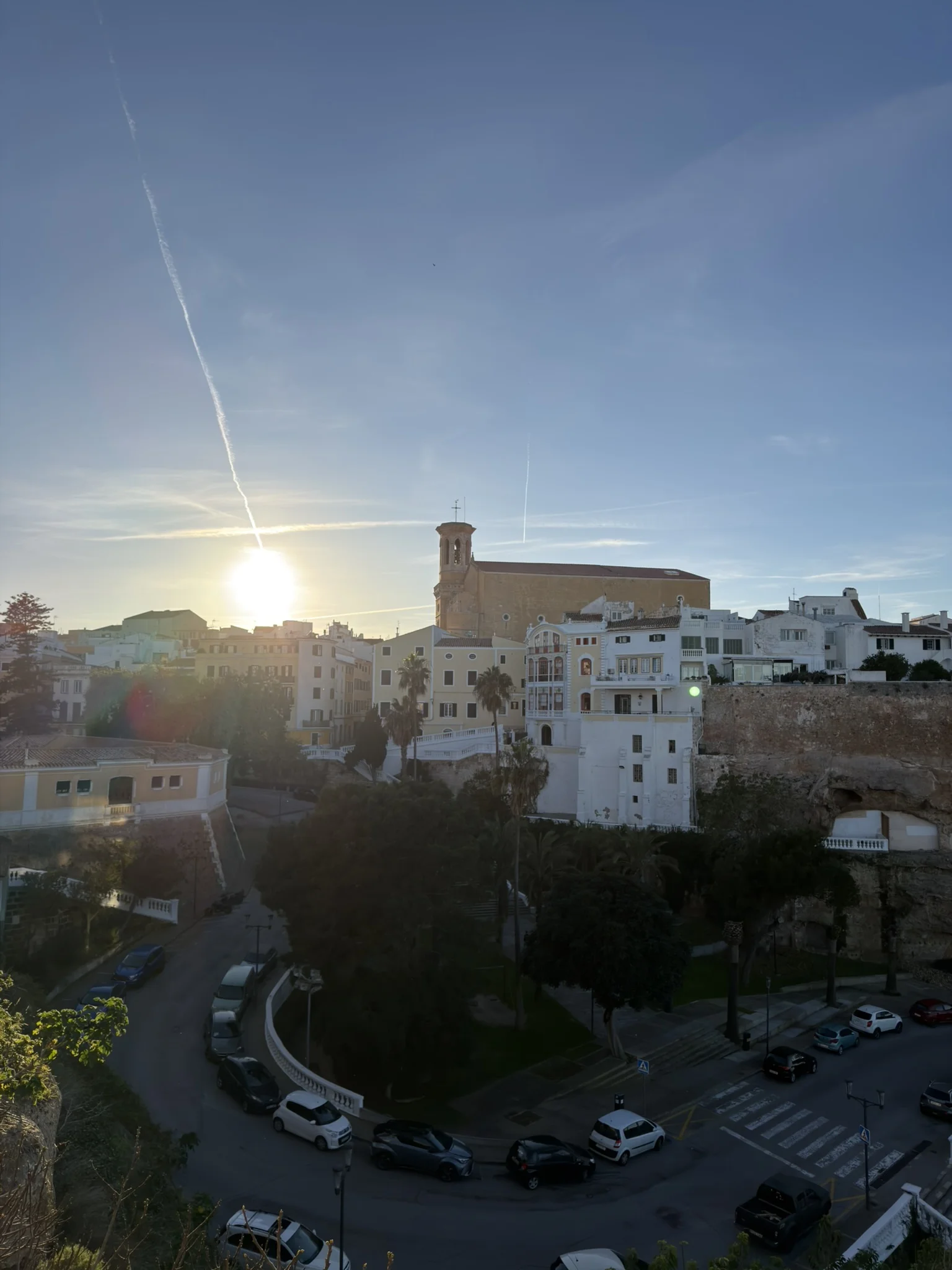
A legacy of a century of British rule: façades, balconies and sash windows not seen elsewhere in Spain.
Mahonnaise sauce may well have originated here, according to popular tradition tied to the French capture of the city in 1756.
The stretch of coastline south of Ciutadella, past Cala en Bosc, holds some of Menorca's least developed coves: turquoise water between pine woods, with barely any buildings around.
One of Menorca's most iconic postcard spots: white sand and clear water framed by pine trees.
Two twin coves linked by a clifftop path; Macarelleta, the smaller one, tends to be a bit quieter.
In late June, Menorca's best-known festival: horses rearing on their hind legs through the crowds in Ciutadella's old town, in the tradition known as "es jaleo".
From 6 to 9 September, in honour of the Virgen de Gracia: between 150 and 180 Menorcan horses enter the town hall square four at a time, in the traditional jaleo.
The last weekend of August, with the traditional jaleos on Saturday afternoon and Sunday morning, plus concerts, parade floats and fireworks.
To confirm festival dates or any official up-to-date information: